
Lab Tests Services Clinic in Rock Hill, SC
At Via Nova Health, we offer comprehensive lab testing that gives you a complete picture of your health. Under the guidance of Dr. Jeff Matz, DC, MS, our state-of-the-art labs provide detailed results that help us diagnose conditions, monitor ongoing health issues, and customize your treatment plan. Whether you’re dealing with a chronic condition or want a full health check-up, our comprehensive labs allow us to deliver accurate and actionable results. For more information, contact us or request an appointment online.
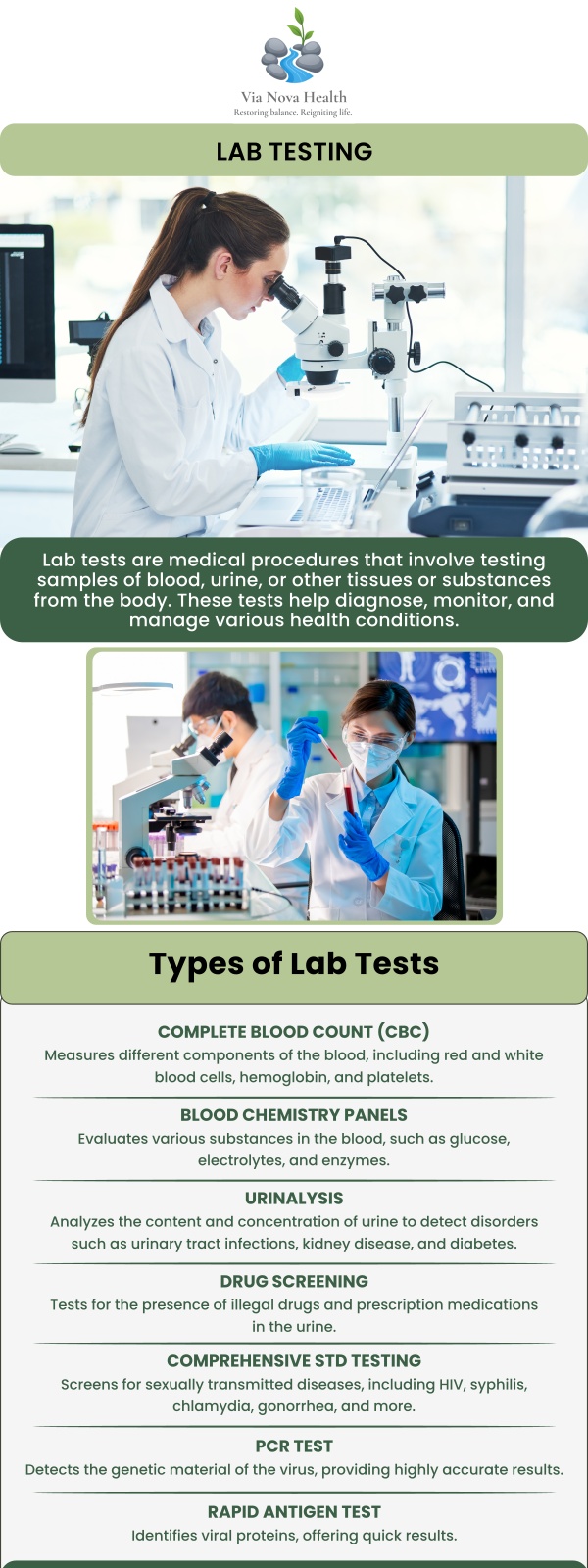
Table of Contents:
How do comprehensive lab tests differ from basic lab tests?
What types of health conditions can comprehensive lab tests help diagnose?
How can comprehensive labs assist in early disease detection?
What Can Comprehensive Labs Reveal About My Hormone Levels?
Explore the Benefits of Comprehensive Lab Services at Via Nova Health with Dr. Jeff Matz, DC, MS
Comprehensive lab tests are more advanced than basic lab tests in the range of information they provide about your health. While basic lab tests typically focus on specific health indicators—such as cholesterol, blood sugar, or kidney function—comprehensive lab tests offer a broader, more detailed analysis of various aspects of your health. These tests often include multiple biomarkers and panels that assess your body’s overall function and detect potential issues before they become clinically significant.
Basic lab tests are often part of routine checkups, offering snapshots of essential indicators like red and white blood cell counts, liver function, kidney function, and blood glucose levels. These tests are useful for evaluating general health and tracking well-known conditions like diabetes or kidney disease. However, they often lack the depth required to uncover complex, underlying health problems.
Comprehensive lab tests go beyond these fundamental measurements to include a range of specialized panels. For instance, a comprehensive metabolic panel (CMP) assesses multiple biochemical substances in the blood, such as proteins, glucose, electrolytes, and enzymes, giving a fuller picture of the body’s metabolic state. Comprehensive tests can also check for nutrient deficiencies, hormonal imbalances, autoimmune diseases, and genetic predispositions—allowing for more accurate diagnosis and treatment planning.
In short, comprehensive lab tests offer a more extensive health evaluation by examining a wider array of biomarkers and functioning across various systems. This makes them an invaluable tool for detecting health issues early and addressing them proactively. At Via Nova Health, we use comprehensive lab tests to get a detailed understanding of your health and create personalized treatment plans tailored to your needs.
Comprehensive lab tests are capable of identifying a wide range of health conditions, from common issues like diabetes and high cholesterol to more complex and hard-to-diagnose conditions such as autoimmune diseases, hormonal imbalances, and certain cancers. At Via Nova Health, we use these tests to help diagnose conditions early, allowing for prompt and effective interventions.
Some of the common health conditions that comprehensive lab tests can help diagnose include:
1. Diabetes and Metabolic Disorders: Comprehensive lab tests can assess blood glucose levels, insulin resistance, and other metabolic factors that contribute to conditions like type 2 diabetes, metabolic syndrome, and insulin resistance. Regular testing helps in managing these conditions and preventing long-term complications.
2. Heart Disease: A comprehensive metabolic panel, lipid profile, and other specialized tests can evaluate risk factors for heart disease, including cholesterol levels, triglycerides, and blood pressure. These tests provide early indicators of cardiovascular problems, including high cholesterol, atherosclerosis, or even early heart failure.
3. Thyroid Disorders: Comprehensive thyroid panels help identify hypothyroidism, hyperthyroidism, and other thyroid dysfunctions by measuring thyroid hormones (T3, T4) and the thyroid-stimulating hormone (TSH). Hormonal imbalances can lead to symptoms like fatigue, weight gain, mood swings, and cognitive issues.
4. Autoimmune Conditions: Autoimmune diseases, such as rheumatoid arthritis, lupus, and multiple sclerosis, often present with subtle or vague symptoms. Comprehensive lab tests can identify specific autoantibodies and markers indicative of autoimmune activity, allowing for earlier diagnosis and better management.
5. Nutrient Deficiencies: Lab tests can identify deficiencies in key vitamins and minerals, such as vitamin D, B12, iron, calcium, and magnesium. These deficiencies can affect energy levels, immune function, and overall health. By identifying these gaps, we can implement dietary changes or supplementation to optimize health.
6. Cancer Markers: Some comprehensive lab tests can screen for early markers of cancers, such as prostate-specific antigen (PSA) for prostate cancer, CA-125 for ovarian cancer, or carcinoembryonic antigen (CEA) for colorectal cancer. While not definitive, these tests help identify potential risk factors, prompting further investigation if needed.
By offering a thorough examination of various biomarkers and internal processes, comprehensive lab tests provide invaluable insights that guide healthcare providers in diagnosing conditions early and crafting personalized treatment plans.
One of the most significant benefits of comprehensive lab tests is their ability to detect diseases in their earliest stages, often before symptoms appear. Early detection is key to effective treatment and can significantly improve health outcomes. Comprehensive lab tests offer a proactive approach to healthcare, allowing doctors to monitor various health markers over time and identify any concerning changes that may indicate a developing health issue.
For example, by monitoring cholesterol levels, blood sugar, and kidney function, comprehensive labs can identify risk factors for cardiovascular disease, diabetes, and kidney disease long before symptoms are noticeable. Early detection enables timely intervention, which may include lifestyle changes or additional tests to prevent further progression of the disease.
Moreover, comprehensive lab tests help uncover hidden health conditions that may not have obvious symptoms. For example, autoimmune diseases such as rheumatoid arthritis or lupus can often be asymptomatic in the early stages, making them difficult to diagnose without lab testing. Similarly, hormone imbalances, such as thyroid dysfunction or adrenal fatigue, can be detected through blood tests before they cause significant health problems.
Another example is cancer detection. Certain cancers, such as ovarian or prostate cancer, may not show obvious symptoms in the early stages. Comprehensive lab tests that screen for tumor markers or genetic predispositions can identify these cancers early, increasing the chances of successful treatment and survival.
Hormones play a crucial role in regulating numerous bodily functions, from metabolism and energy levels to mood and reproductive health. An imbalance in hormones can lead to a wide range of symptoms, including fatigue, weight gain, depression, and digestive issues. Comprehensive lab tests are invaluable tools in assessing hormone levels and identifying any imbalances that may be affecting your health.
At Via Nova Health, comprehensive lab tests can measure levels of thyroid hormones (T3, T4, TSH), adrenal hormones (like cortisol and DHEA), reproductive hormones (including estrogen, progesterone, and testosterone), and insulin. These tests provide insight into how well your endocrine system is functioning and can help diagnose conditions such as:
1. Thyroid Disorders: Imbalances in thyroid hormones can lead to conditions like hypothyroidism (underactive thyroid) or hyperthyroidism (overactive thyroid), both of which can cause significant health problems, including weight changes, energy fluctuations, and cognitive difficulties.
2. Adrenal Imbalance: The adrenal glands produce hormones like cortisol and adrenaline that regulate stress responses, metabolism, and immune function. An imbalance in these hormones, such as in adrenal fatigue or Cushing’s syndrome, can lead to chronic fatigue, difficulty handling stress, and weight gain.
3. Reproductive Hormones: Estrogen, progesterone, and testosterone are essential for reproductive health and overall well-being. Imbalances in these hormones can affect fertility, menstrual cycles, mood, and energy levels. Comprehensive lab tests help identify these imbalances, leading to more targeted treatments for conditions like polycystic ovary syndrome (PCOS), menopause, and low testosterone.
4. Insulin and Glucose Regulation: Lab tests that measure insulin levels and blood glucose provide insights into how your body is processing sugar and regulating metabolism. These tests are essential for diagnosing insulin resistance, prediabetes, and type 2 diabetes.
By using comprehensive lab tests to assess hormone levels, we can pinpoint the underlying causes of your symptoms and create a personalized treatment plan to restore balance and optimize health.
At Via Nova Health, Dr. Jeff Matz, DC, MS, emphasizes the importance of comprehensive lab services to gain a detailed understanding of your overall health. These advanced tests provide a thorough analysis of various bodily functions, from organ health and metabolism to hormone balance and immune system performance. By uncovering hidden conditions and monitoring changes over time, comprehensive lab services help Dr. Matz create personalized treatment plans that optimize health and prevent potential risks. With the right data, we can take a proactive approach to your health, ensuring you receive the most effective care tailored to your specific needs. For more information, contact us or request an appointment online. We serve patients from Lesslie SC, India Hook SC, Riverview SC, Newport, SC, Catawba SC, Tega Cay SC, and surrounding areas.
Check Out Our 5 Star Reviews