

Unlocking Longevity: The Power of VO2 Max
VO2 Max, often regarded as the gold standard for cardiovascular fitness, measures the maximum amount of oxygen your body can utilize during intense exercise. While it’s a key indicator of athletic performance, recent studies suggest that VO2 Max plays a much larger role in longevity and overall health. By improving your VO2 Max, you can enhance your heart health, increase your lifespan, and improve your quality of life. For more information, contact us or request an appointment online. We serve patients from Lesslie SC, India Hook SC, Riverview SC, Newport, SC, Catawba SC, Tega Cay SC and surrounding areas.
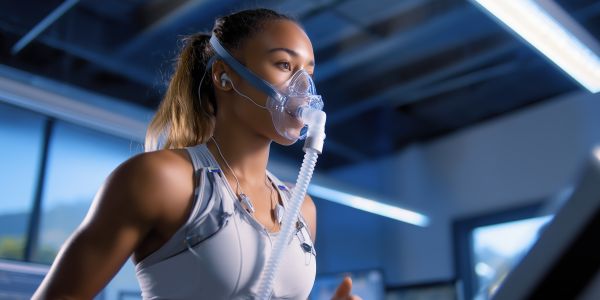

In an era where we’re constantly chasing the fountain of youth through diets, supplements, and biohacks, one metric stands out as a true indicator of health and vitality: VO2 max. Often hailed as the gold standard of cardiovascular fitness, VO2 max isn’t just for elite athletes anymore—it’s a window into your body’s efficiency and a predictor of how long and well you might live. We’ll dive into what VO2 max really is, how and why you should get it tested, and its fascinating link to longevity.
What is VO2 Max?
VO2 max, short for maximal oxygen uptake, measures the maximum volume of oxygen (in milliliters) your body can consume and utilize per kilogram of body weight per minute during intense exercise. Essentially, it’s a gauge of how effectively your heart, lungs, and muscles work together to transport and use oxygen for energy production. Think of it as your aerobic engine’s horsepower—the higher your VO2 max, the better your body performs under physical stress.
This metric is expressed in units like ml/kg/min. For context, sedentary adults might score around 27-40 ml/kg/min, while elite endurance athletes can hit 70-90 ml/kg/min or higher. Factors like age, gender, genetics, and training level influence your baseline, with values naturally declining about 1% per year after age 25 due to reduced cardiac output and muscle efficiency. But the good news? It’s trainable at any age.
How to test VO2 Max
Testing VO2 max provides an objective snapshot of your fitness level, helping you tailor training and track improvements. The gold standard is a direct lab test, often conducted in a medical or fitness facility. Here’s how it typically works:
Direct Measurement (Lab Test): You’ll wear a mask connected to a gas analyzer while exercising on a treadmill or stationary bike. The intensity ramps up gradually until you reach exhaustion, usually in 10-20 minutes. The equipment measures your oxygen intake and carbon dioxide output in real-time, calculating VO2 max via formulas like the Fick equation (VO2 max = cardiac output × oxygen extraction difference).
Submaximal or Field Tests: For a less invasive option, try the Cooper 12-minute run (run as far as possible in 12 minutes and plug the distance into a formula) or the 3-minute step test (step up and down on an 8-inch platform at a set pace and measure post-exercise heart rate). Wearables like smartwatches can estimate it based on heart rate data during workouts, though they’re less accurate.
These tests are safe for most people but should be done under supervision if you have health concerns. Costs range from $100-300 for a lab test, making it accessible for those serious about optimization.
To visualize, here’s what a typical VO2 max test looks like:
Why should you test VO2 Max?
Beyond bragging rights, testing VO2 max is crucial because it quantifies your cardiorespiratory fitness—a key pillar of overall health. A low score might signal risks for conditions like heart disease, diabetes, or even poor sleep quality, while improvements can boost energy, recovery, and mental clarity. It’s not just about performance; regular testing motivates lifestyle changes, like incorporating high-intensity interval training (HIIT) or steady-state cardio, which can increase VO2 max by 15-20% with consistent effort.
In short, knowing your VO2 max empowers you to make data-driven decisions for better health outcomes.
VO2 Max and its link to longevity
Here’s where VO2 max shines as a longevity biomarker. Numerous studies show a strong inverse relationship between VO2 max and all-cause mortality—meaning higher levels are tied to longer, healthier lives. For instance, a massive study of over 100,000 people found that elevated VO2 max reduces mortality risk without an upper limit; every increment counts. Meta-analyses confirm it predicts lower chances of cardiovascular events, cancer, and stroke.
The mechanisms? A high VO2 max reflects efficient oxygen delivery, which supports mitochondrial health, reduces inflammation, and preserves muscle mass—hallmarks of aging gracefully. It essentially measures your “biological age” over chronological age; trained older adults can have VO2 max scores matching untrained younger folks, adding years of quality life. Research like Blair et al. (1989) and Myers et al. (2002) underscores that better fitness via VO2 max slashes mortality risks independently of other factors.
To boost it for longevity, focus on aerobic activities, HIIT, a nutrient-rich diet (think omega-3s and antioxidants), and habits like good sleep and stress management.
Bottom line
VO2 max isn’t just a number—it’s a roadmap to vitality and extended lifespan. By understanding and testing it, you’re investing in a future of better health and independence. If you’re ready to level up, start with a simple field test or consult a professional, your body (and your longevity) will thank you.




 Send Text
 How May I Help You?